

Table of Contents
- 1. Structural vs. Non-Structural Cracks: The Diagnosis That Determines Everything
- 2. How Epoxy Crack Injection Actually Works
- 3. Epoxy vs. Polyurethane Injection Resin: Choosing the Right Material
- 4. When Epoxy Injection Is Not the Right Repair
- 5. Common Mistakes in Epoxy Crack Injection Projects
- 6. Conclusion: Diagnose First, Then Match the Injection Material to the Crack Type
Not every crack in a concrete slab, wall, or foundation needs the same repair approach — and using the wrong one is one of the most expensive mistakes in concrete maintenance. Epoxy crack injection can restore a cracked concrete member to near its original structural strength, but only when the crack is correctly diagnosed as structural versus non-structural, and only when the injection process itself is done correctly. This guide covers how to make that diagnosis, how epoxy injection actually works, and where a different repair material is the better choice.
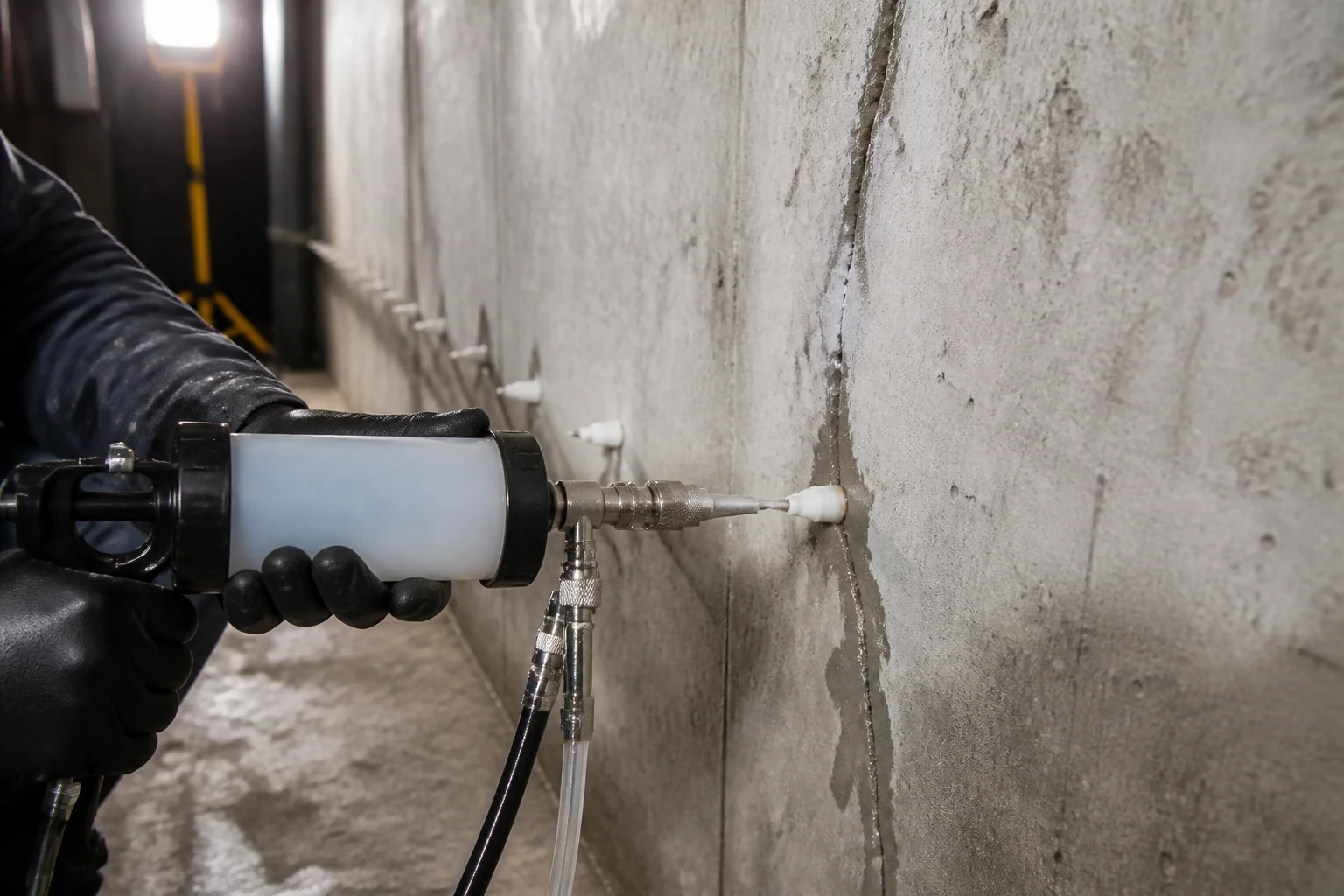
Structural vs. Non-Structural Cracks: The Diagnosis That Determines Everything
Before selecting a repair material, the crack must be classified — this single decision determines whether epoxy injection is even the right approach:
- Structural cracks compromise the load-bearing capacity of the concrete member. These typically show signs of ongoing movement, and repairing them requires a rigid, high-strength material that can restore composite structural action — this is where epoxy injection is specifically effective.
- Non-structural cracks (shrinkage cracks, surface crazing, or cosmetic cracking that has stabilized) do not require structural restoration. Injecting rigid epoxy into a crack still experiencing minor thermal movement can create a new failure point next to the repair.
- Active vs. dormant cracks matters independently of structural classification — a crack still visibly moving generally should not be epoxy-injected until the movement has stabilized or the underlying cause has been addressed.
How Epoxy Crack Injection Actually Works
Epoxy injection is not the same process as surface-applied epoxy coating or patching — it is a pressure-injection method designed to fill the full depth of a crack, not just seal its surface:
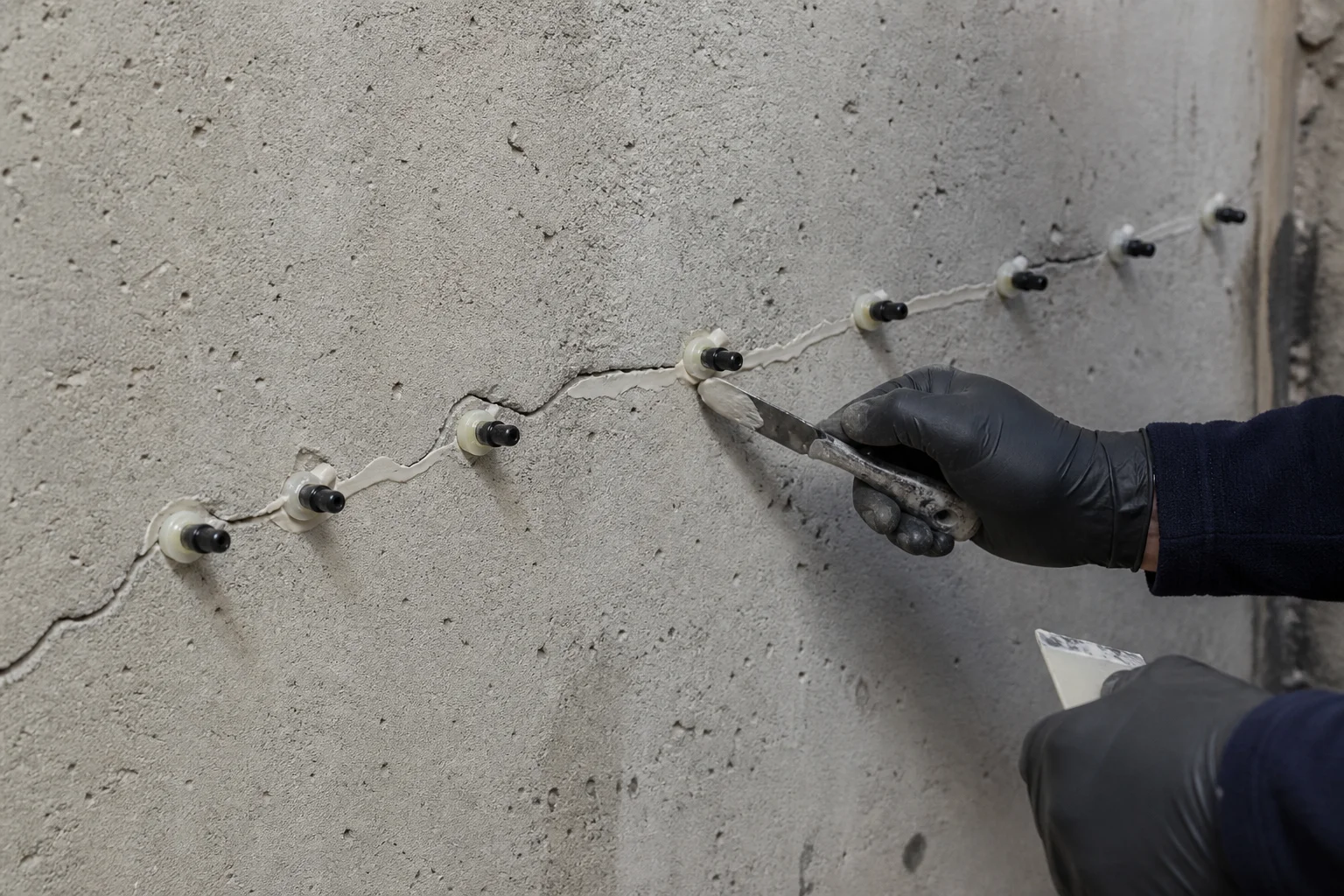
- Surface ports are installed along the length of the crack at set intervals, sized to the crack width and depth.
- The crack surface between ports is sealed with a paste sealer to contain injection pressure and prevent the low-viscosity epoxy from leaking out before it penetrates the full crack depth.
- Low-viscosity epoxy resin is injected under pressure, typically starting from the lowest port and working upward so injected material displaces air and follows the crack path.
- Cure occurs within the crack itself, chemically bonding to both faces of the crack and restoring a rigid, monolithic connection.
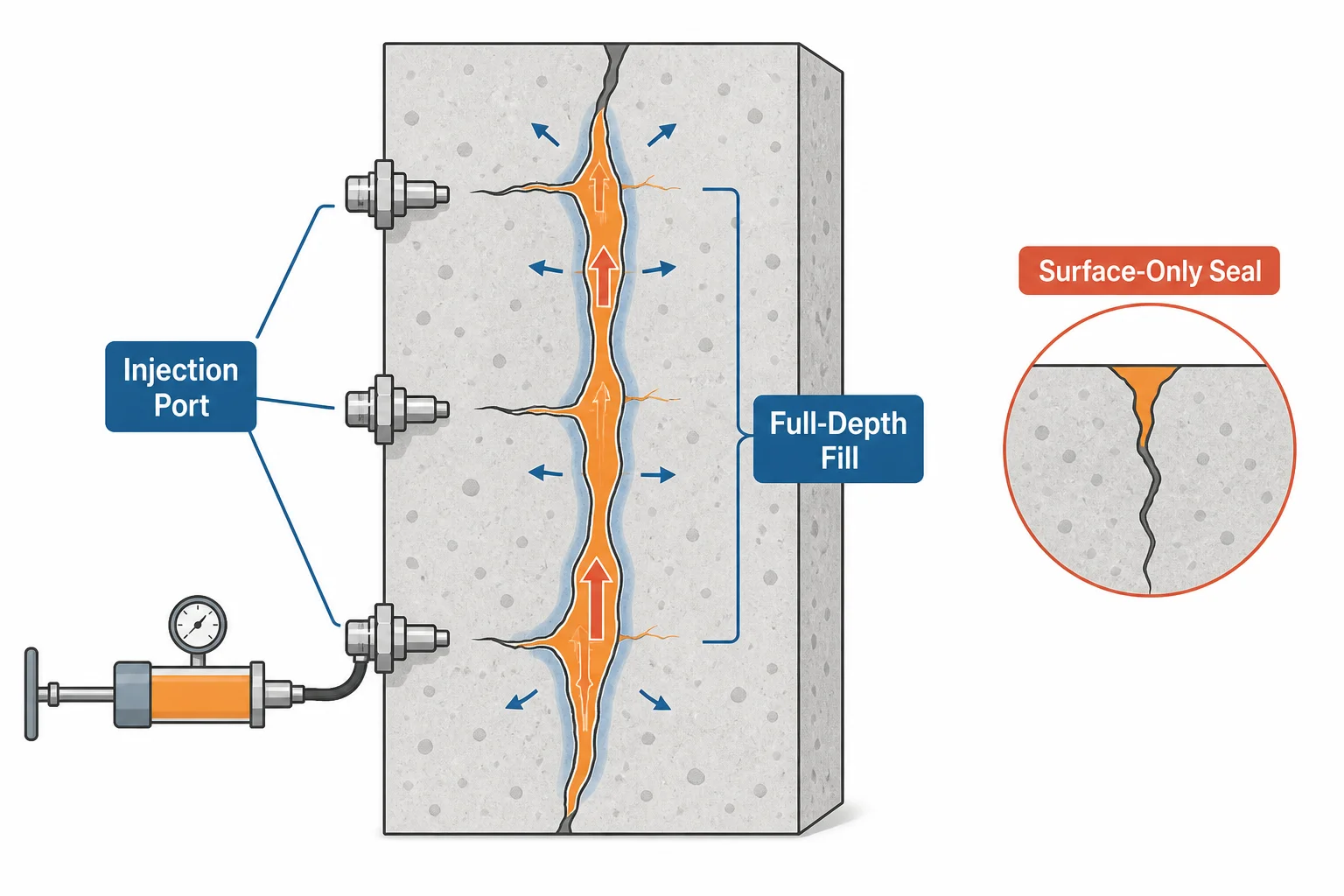
This is fundamentally different from routing-and-sealing a crack with a flexible sealant at the surface — injection restores structural continuity through the full depth of the member, while surface sealing only prevents water and debris intrusion at the visible face.
Epoxy vs. Polyurethane Injection Resin: Choosing the Right Material
| Factor | Epoxy Injection Resin | Polyurethane Injection Resin |
|---|---|---|
| Primary use case | Structural crack repair, restoring load-bearing capacity | Water infiltration stopping, often in active-leak conditions |
| Cured material | Rigid, high-compressive-strength | Flexible to semi-rigid, often foams on contact with water |
| Works with active water/moisture in the crack | Generally requires a dry or near-dry crack | Many formulations are designed to react with water present |
| Restores structural capacity | Yes, this is the primary purpose | No — a waterproofing method, not a structural repair |
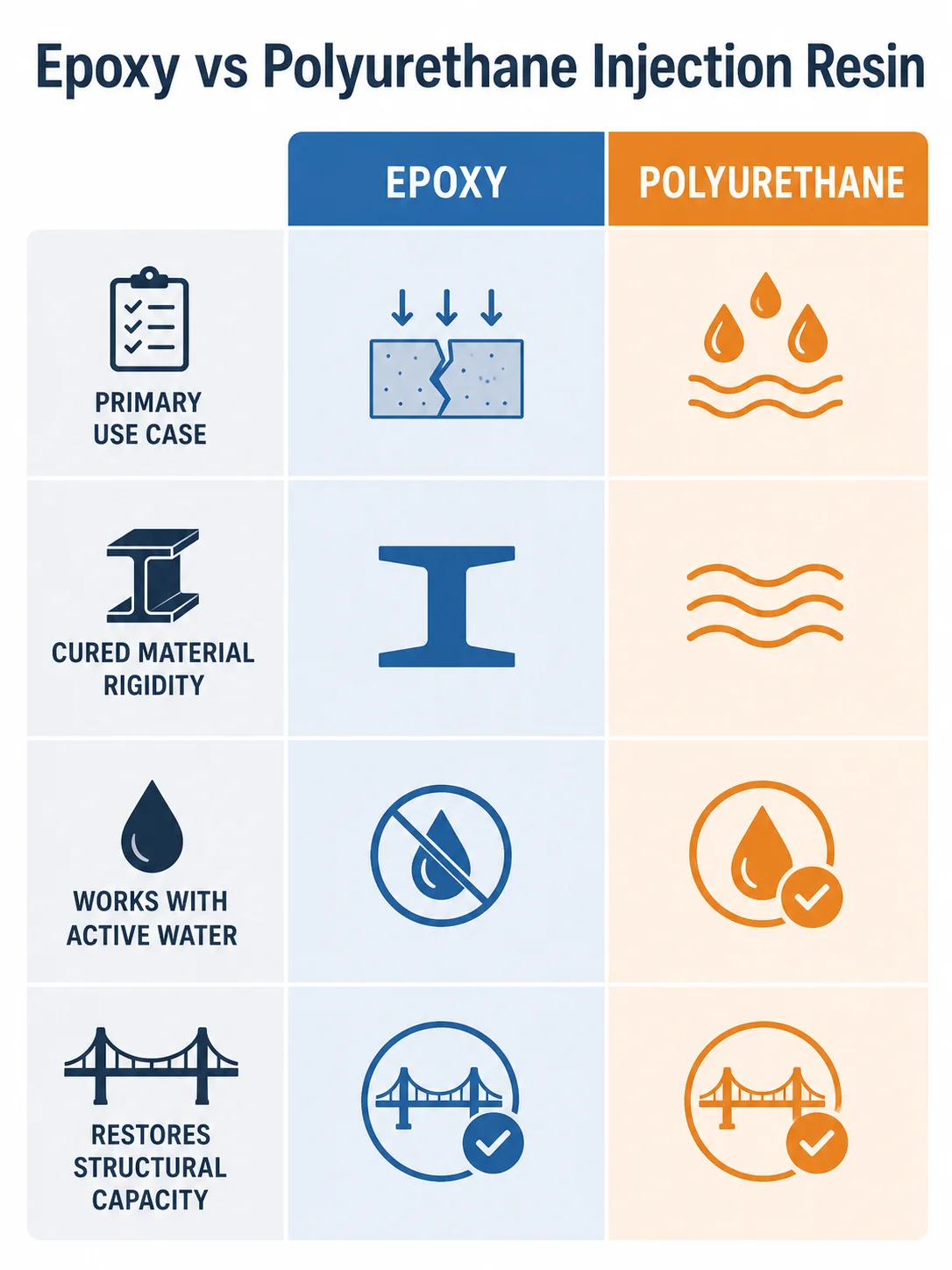
Choosing polyurethane injection for a structural crack without addressing the underlying structural issue is a common and costly mistake — the leak may stop, but the structural deficiency remains unaddressed. For general structural adhesive selection beyond crack injection, our Industrial Epoxy Adhesive Buyer’s Guide covers how to read datasheet specifications relevant to structural bonding chemistry more broadly.
When Epoxy Injection Is Not the Right Repair
- Active, unstabilized movement. Injecting rigid epoxy into a crack still experiencing significant movement risks creating a new crack adjacent to the repair.
- Cracks caused by an unresolved underlying issue. Epoxy injection restores continuity but does not address the root cause — the crack is likely to recur.
- Cracks requiring flexibility, not rigidity. Control joints and intentional movement joints should never be epoxy-injected.
- Very fine cracks below the resin’s practical penetration width. A different approach may be more appropriate.
Common Mistakes in Epoxy Crack Injection Projects
- Skipping the structural vs. non-structural diagnosis and defaulting to epoxy injection for every crack.
- Injecting into a crack with active water intrusion using a standard epoxy resin not formulated for moist conditions.
- Inadequate port spacing or surface seal, causing the epoxy to bypass sections of the crack.
- Injecting before movement has stabilized, creating a repair that fails again within a short timeframe.
- Assuming injection alone resolves the underlying cause of structural cracking, when engineering assessment is also needed.
Conclusion: Diagnose First, Then Match the Injection Material to the Crack Type
Concrete crack repair with epoxy is a well-proven structural restoration method — but its effectiveness depends entirely on correctly diagnosing whether the crack is structural, whether it has stabilized, and whether the crack environment matches the resin’s formulation. Explore Joobond’s structural adhesive range in our Industrial Epoxy Adhesive Buyer’s Guide for datasheet-level selection guidance applicable to crack injection resin sourcing.
 English
  العربية
  Español de México
  Русский
  Tiếng Việt
  Português do Brasil
  Bahasa Indonesia
  Türkçe