

Table of Contents
- 1. Why General-Purpose Sealants Fail in Marine Environments
- 2. Core Marine Sealant Chemistries Compared
- 3. Structural Bonding vs. Bedding Compounds: Know the Difference
- 4. Application-Specific Selection Guide
- 5. Certification and Testing Standards to Request
- 6. Common Mistakes in Marine Sealant Selection
- 7. Conclusion: Match the Chemistry to the Load and the Environment
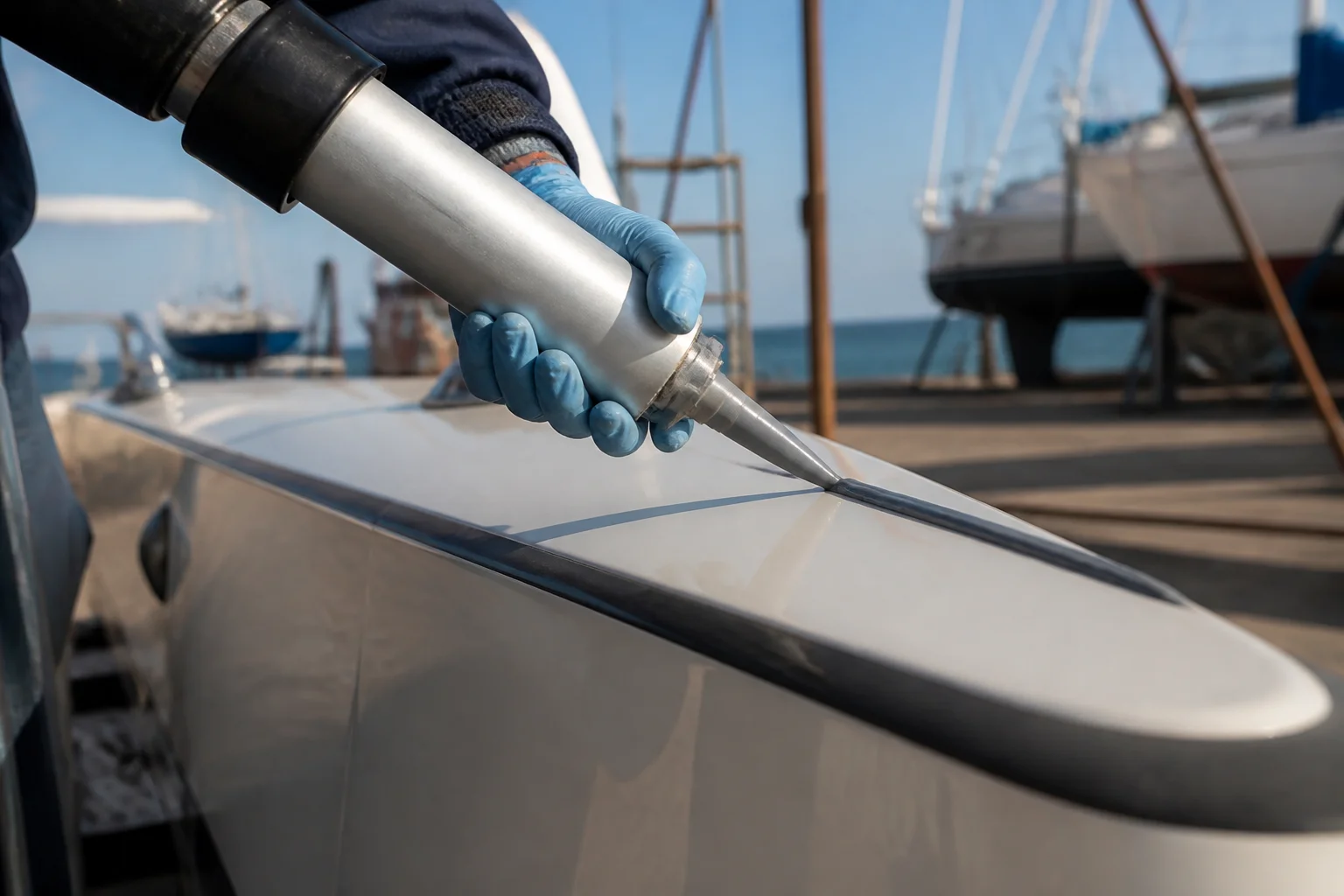
Saltwater, constant UV exposure, and continuous vibration from wave impact make marine environments one of the harshest testing grounds for any adhesive or sealant. A product that performs flawlessly in a dry warehouse joint can fail within months below the waterline or on an exposed deck seam. This guide breaks down what actually differentiates a marine-grade adhesive sealant from a general-purpose one, and how to evaluate suppliers for boat building, deck sealing, and offshore structural applications.
Why General-Purpose Sealants Fail in Marine Environments
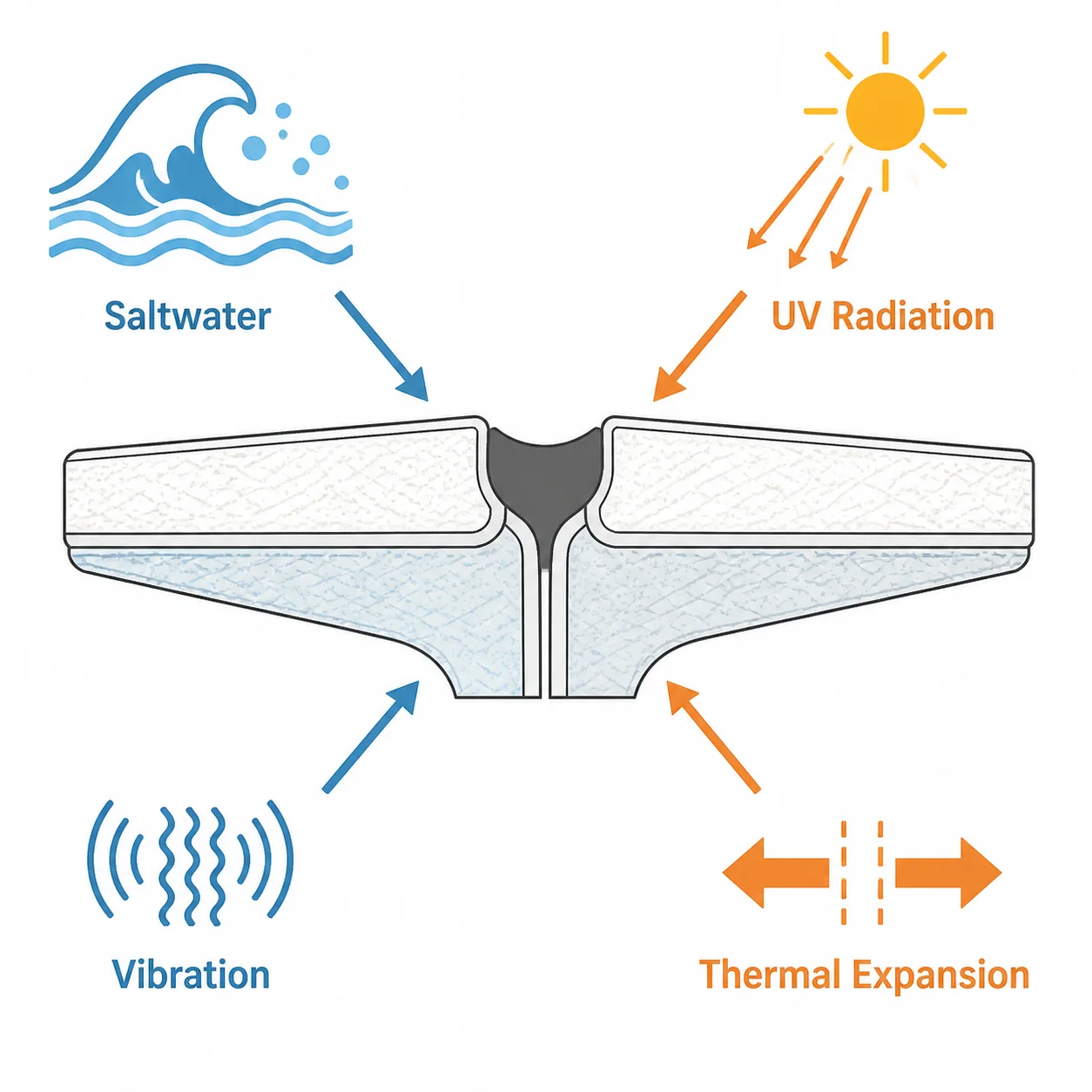
Most sealant failures at sea are not due to poor installation — they happen because the product was never engineered for the specific combination of stressors marine applications create simultaneously:
- Continuous saltwater immersion or splash exposure, which accelerates hydrolysis in poorly formulated polymers and corrodes any exposed metal fasteners the sealant might rely on.
- UV degradation at a higher intensity than most inland applications, since open water reflects additional UV radiation onto the underside of overhangs and hull surfaces.
- Constant micro-vibration and flexing from wave impact, engine operation, and thermal cycling between sun-exposed deck surfaces and cooler below-deck compartments.
- Differential thermal expansion between dissimilar substrates — aluminum hulls, fiberglass decks, and glass portlights all expand at different rates, putting continuous shear stress on the sealed joint.
A sealant that only addresses one or two of these factors will eventually fail; marine-grade products are formulated to resist all four simultaneously.
Core Marine Sealant Chemistries Compared
| Chemistry | Saltwater Resistance | UV/Weathering | Flexibility for Vibration | Typical Marine Use |
|---|---|---|---|---|
| Polyurethane | Excellent | Good (may chalk over years) | High | Structural bonding, below-waterline seams, hull-to-deck joints |
| MS Polymer (Hybrid) | Excellent | Excellent | High | Deck hardware, teak decking, glazing, general above-deck sealing |
| Silicone | Good | Excellent | Very High | Portlight/window sealing, non-structural gaps |
| Butyl Rubber | Excellent (vapor barrier) | Moderate | Moderate | Bedding compounds under hardware, gasketing |
For a deeper technical breakdown of how MS Polymer and silicone chemistries differ in adhesion mechanism, see our MS Polymer vs. Silicone comparison — the same paintability and damp-surface bonding advantages that apply to construction joints are equally relevant to teak decking and hardware bonding above the waterline.
Structural Bonding vs. Bedding Compounds: Know the Difference
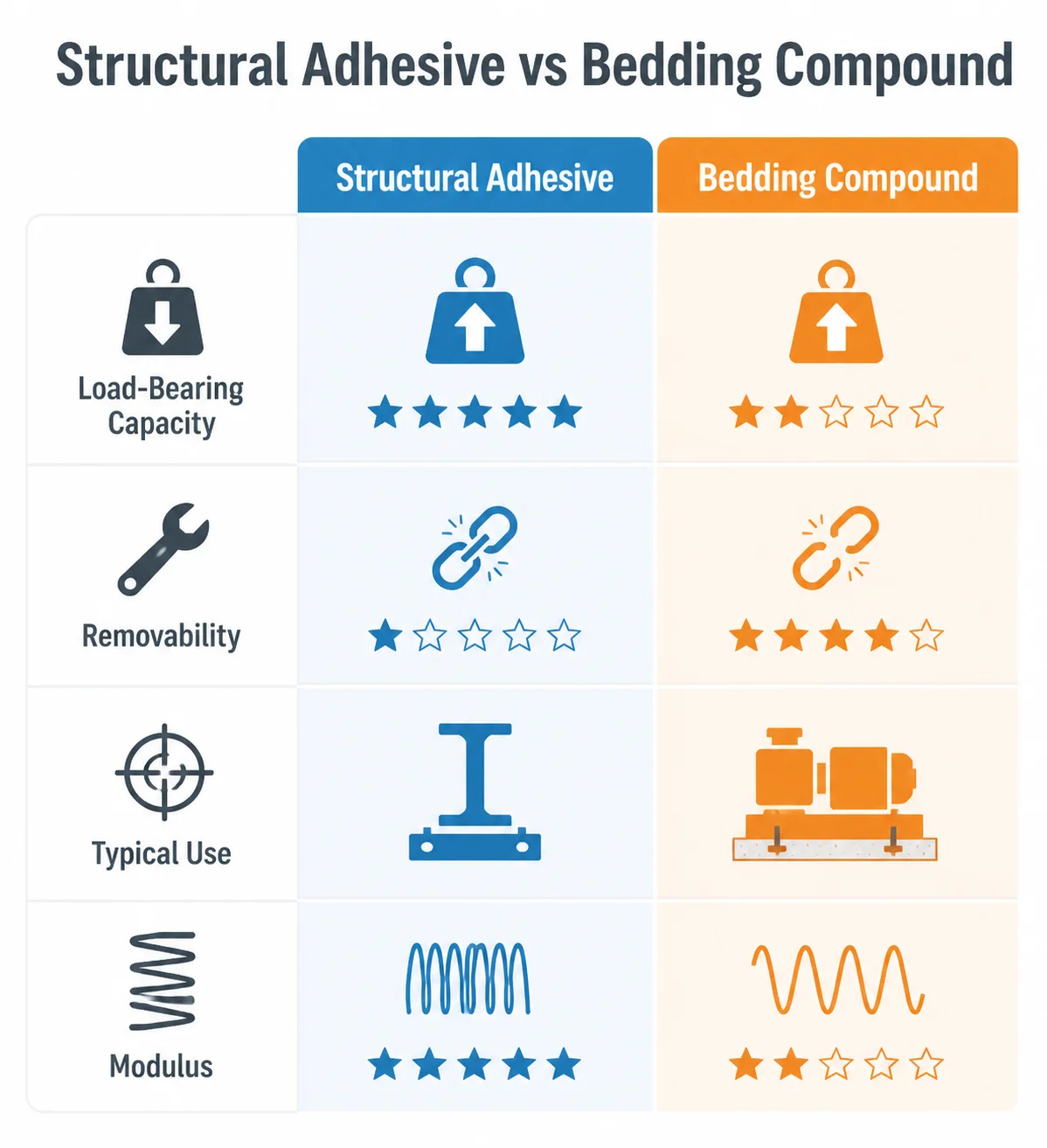
One of the most common procurement mistakes in marine applications is treating “sealant” as a single category. In practice, marine work requires two distinct product classes:
- Structural adhesive sealants (typically polyurethane or high-modulus MS Polymer) are load-bearing — they hold hull-to-deck joints, stringers, and structural hardware in place. These require high tensile and shear strength ratings, not just watertightness.
- Bedding compounds (often butyl or lower-modulus polyurethane) are designed to seal — not structurally bond — hardware like cleats, rails, and through-hull fittings, allowing for future removal without damaging the substrate.
Using a structural adhesive where a removable bedding compound was needed (or vice versa) is one of the most frequent specification errors in boat building and refit work, leading either to hardware that cannot be serviced or seals that shift under load.
Application-Specific Selection Guide
- Below-waterline hull seams: Prioritize polyurethane with proven long-term saltwater immersion testing; avoid silicone, which does not bond reliably to fiberglass gelcoat for structural loads.
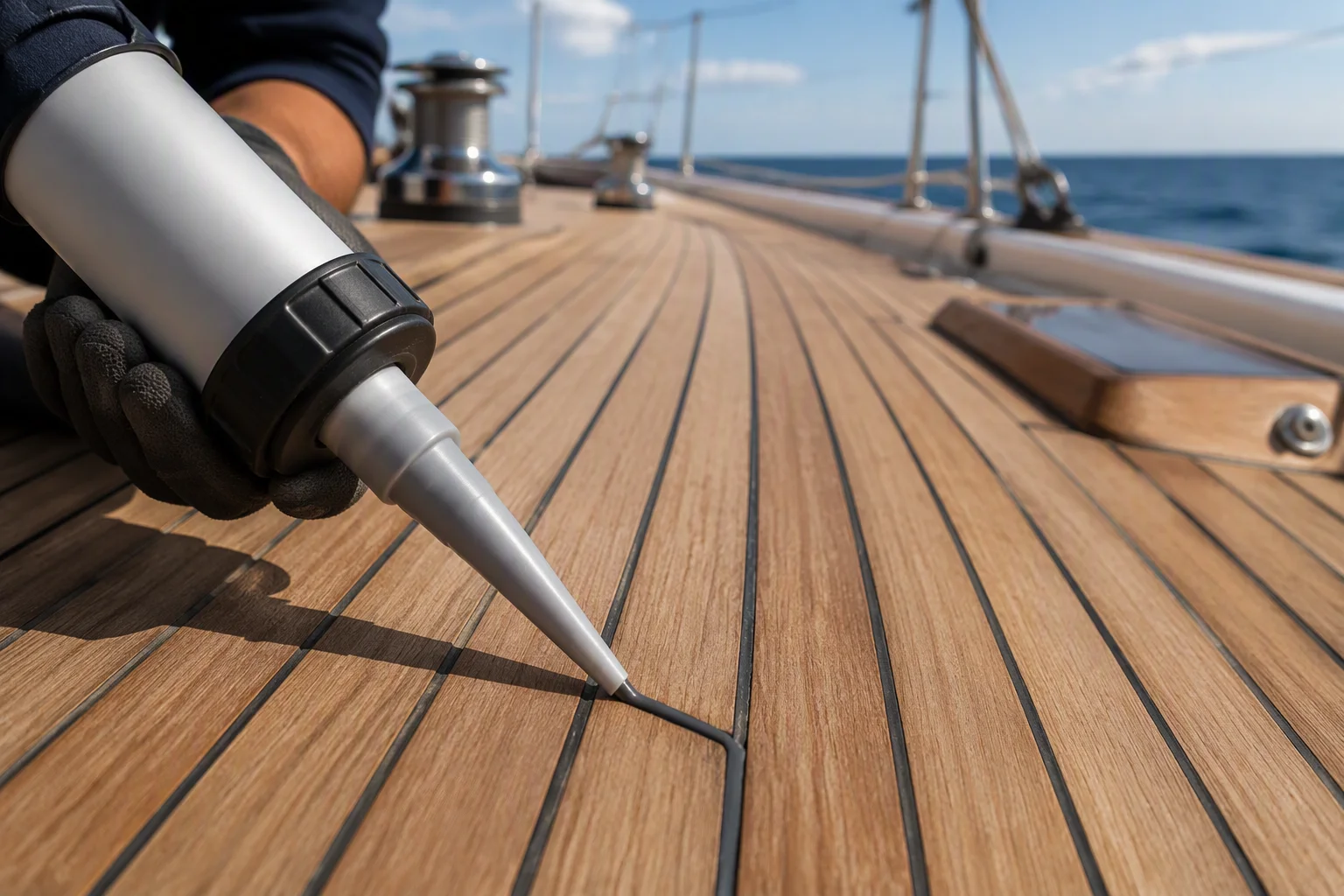
- Teak decking and above-deck hardware: MS Polymer hybrids are increasingly the modern standard — they offer the flexibility to handle wood movement across humidity cycles while remaining paintable/varnishable.
- Portlights, windows, and glazing: Neutral-cure silicone remains preferred for its UV stability and clarity, provided the application is non-structural.
- Through-hull fittings and removable hardware: Butyl rubber bedding compounds allow future disassembly for maintenance without destructive removal.
Certification and Testing Standards to Request
Marine-grade claims should be backed by documented testing, not just marketing language. When evaluating a supplier, request data against:
- ASTM C920 — Standard specification for elastomeric joint sealants, covering movement capability and weathering.
- ISO 21787 or equivalent marine adhesive testing referenced in classification society guidelines.
- Salt spray / fog testing results (e.g., ASTM B117) demonstrating actual performance under accelerated saltwater exposure.
- UV weathering test data (QUV or equivalent) showing retained flexibility and adhesion after extended accelerated UV exposure.
Common Mistakes in Marine Sealant Selection
- Assuming “waterproof” means “marine-grade.” A sealant can resist rain and splash without surviving continuous saltwater immersion.
- Ignoring substrate-specific primers. Marine substrates often require a compatible primer for the sealant to achieve full adhesion.
- Using structural adhesive for removable hardware. This turns routine maintenance into a destructive removal job.
- Underestimating cure time in cold, humid marine air. Plan haul-out schedules accordingly.
- Choosing based on price alone for structural joints. The cost difference is small relative to the cost of a hull-to-deck joint failure at sea.
Conclusion: Match the Chemistry to the Load and the Environment
Marine adhesive sealant selection requires matching chemistry to load requirements (structural vs. bedding), substrate compatibility, and environmental exposure separately for each joint on a vessel. Explore Joobond’s Polyurethane Sealant and Silicone Sealant ranges for formulations suited to structural marine bonding and above-deck sealing applications respectively.
 English
 العربية
 Español de México
 Русский
 Tiếng Việt
 Português do Brasil
 Bahasa Indonesia
 Türkçe