

Table of Contents
- 1. Why EV Battery Packs Need More Than Just Glue
- 2. How Thermal Conductive Adhesives Work
- 3. Structural Adhesive vs. Thermal Adhesive: What’s the Difference?
- 4. Application Points on a Modern EV Platform
- 5. Selection Criteria for 2026 Procurement
- 6. Common Mistakes When Switching to Thermal Adhesive Bonding
- 7. Conclusion: Bonding as a Thermal Management Strategy
Electric vehicle manufacturing has pushed adhesive technology into territory that traditional mechanical fasteners cannot reach. As battery packs become denser and motor assemblies run hotter, engineers need a single material that can simultaneously manage heat dissipation, absorb vibration, and hold structural loads. This is where thermal conductive adhesive and structural adhesive for automotive applications converge into one of the fastest-growing categories in industrial bonding.
Why EV Battery Packs Need More Than Just Glue
A traditional adhesive only needs to hold two surfaces together. A battery pack adhesive has to do three jobs at once:
- Conduct heat away from cells to prevent thermal runaway, without acting as an electrical conductor.
- Absorb constant low-frequency vibration from the vehicle chassis without fatigue cracking.
- Maintain structural rigidity so the battery enclosure contributes to overall vehicle crash safety.
No single mechanical fastener solves all three. This is why thermal conductive adhesives — engineered with ceramic or mineral fillers instead of metal particles — have become the default choice for battery module bonding in 2026.
How Thermal Conductive Adhesives Work
Unlike standard structural adhesives, thermally conductive formulations are loaded with electrically-insulating but heat-conductive fillers (typically aluminum oxide or boron nitride particles suspended in a silicone or epoxy matrix). This lets the adhesive bond cell modules to the cooling plate while pulling heat away from the battery — all without risking a short circuit.
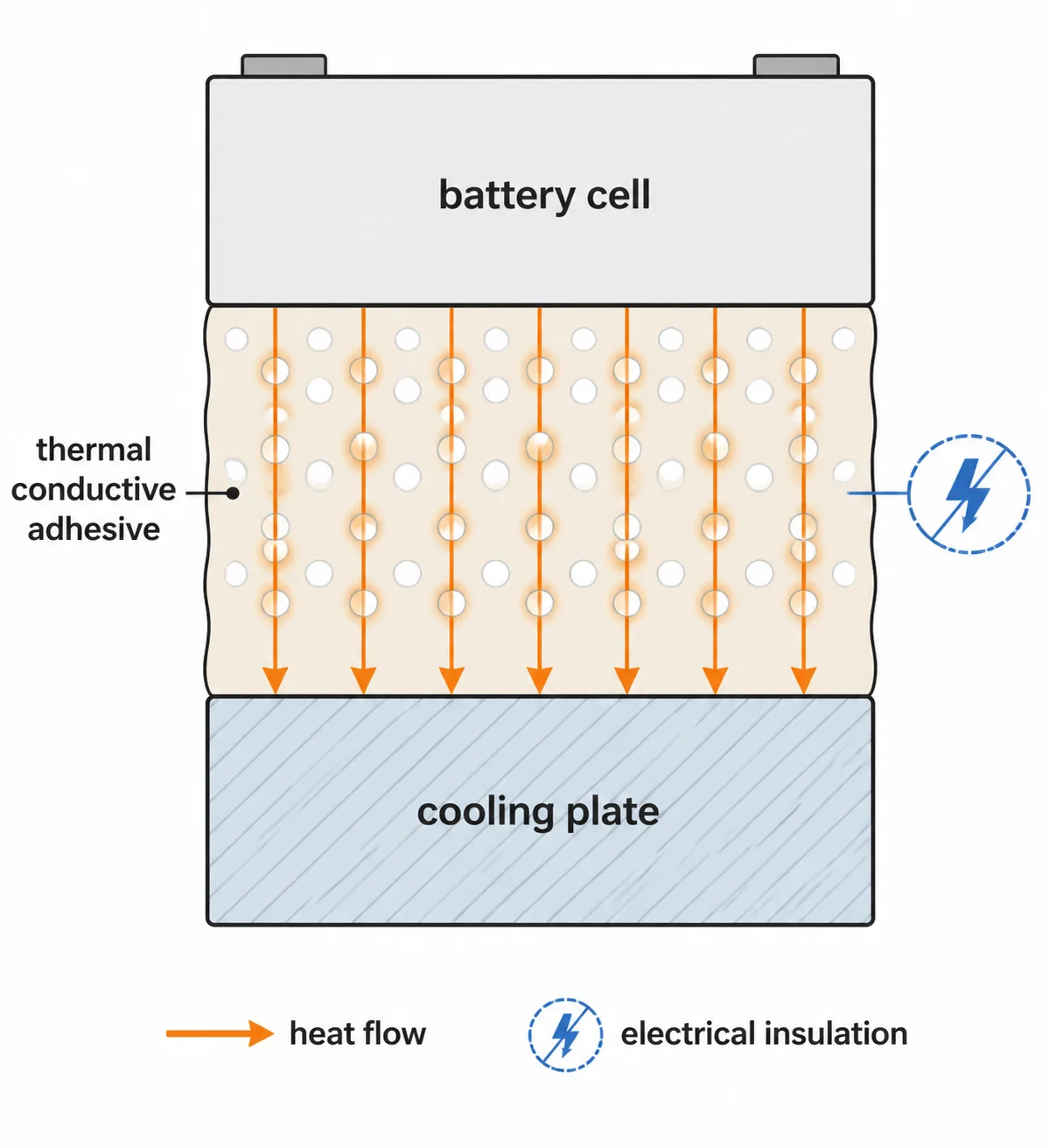
The mechanical benefit is just as important: because the adhesive layer is continuous and flexible, it distributes vibrational stress evenly across the entire bonded surface, rather than concentrating stress at a handful of bolt points the way mechanical fasteners do. This is critical in EV applications, where the battery pack experiences constant micro-vibration over a 10+ year service life.
Structural Adhesive vs. Thermal Adhesive: What’s the Difference?
These two categories often get confused because EV assembly frequently requires both, sometimes in the same joint:
| Property | Structural Adhesive (Automotive) | Thermal Conductive Adhesive |
|---|---|---|
| Primary function | Load-bearing bond strength | Heat dissipation + moderate bonding |
| Typical base chemistry | Epoxy, MS Polymer, Polyurethane | Silicone or epoxy with ceramic filler |
| Thermal conductivity | Low (not engineered for heat transfer) | High (0.5–3.0 W/m·K typical range) |
| Common use case | Body panel bonding, chassis joints | Battery cell-to-cooling-plate bonding |
| Search intent (2026 data) | Informational + Transactional | Informational + Commercial |
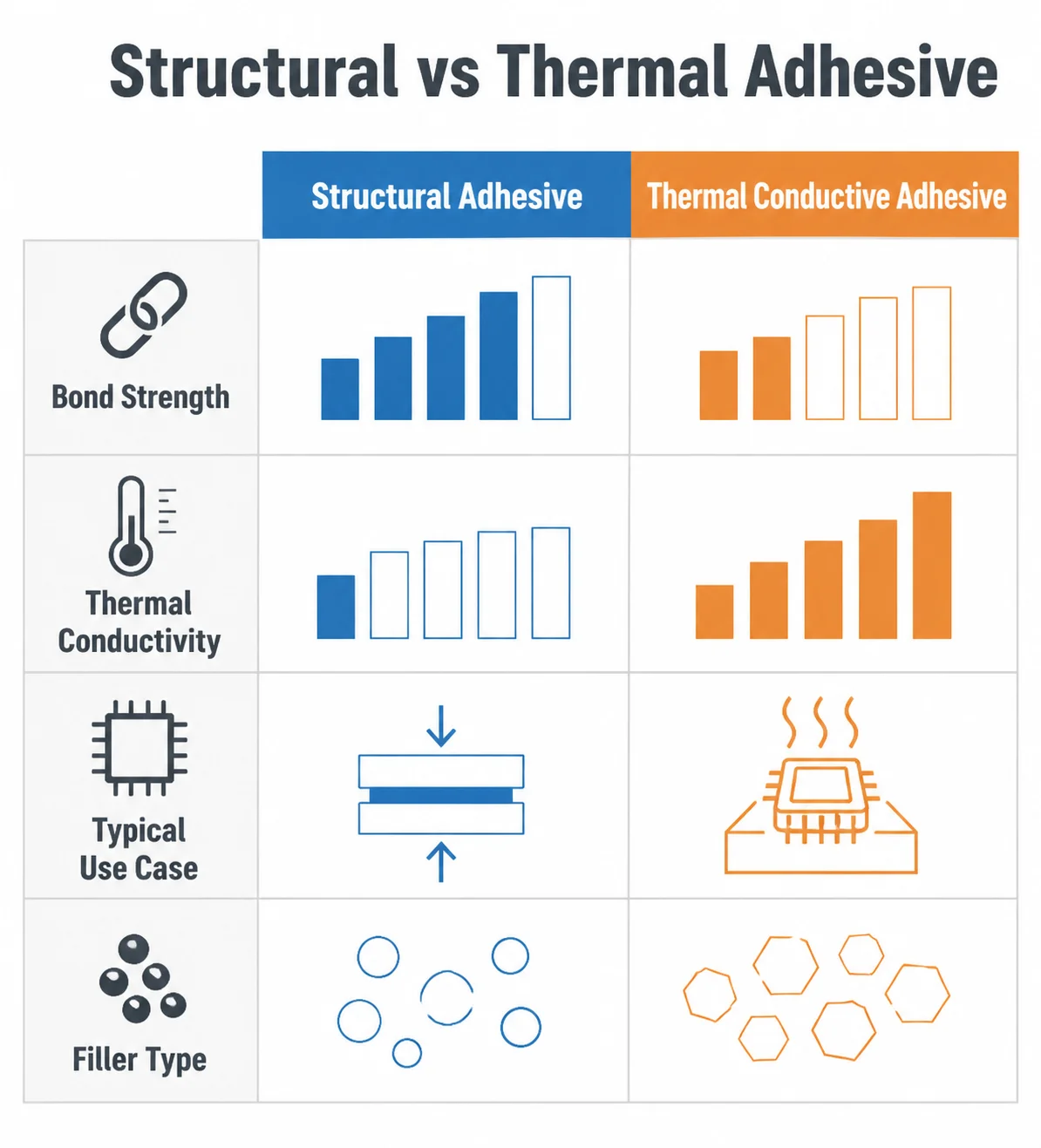
For body panel and chassis-level bonding — where the priority is pure mechanical strength rather than heat transfer — see our Metal Adhesive Supplier Guide for substrate-specific selection criteria.
Application Points on a Modern EV Platform
Thermal conductive adhesive is not a single-use product; it appears at several distinct points in EV assembly:
- Cell-to-cooling-plate bonding: The most common application. The adhesive replaces thermal pads in high-density battery packs, offering both better heat transfer and permanent mechanical retention.
- Battery module-to-tray bonding: Secures modules within the pack housing while damping road vibration.
- Power electronics heat-sinking: Bonds IGBT modules and inverter components to heat sinks, a use case that overlaps with general Automotive Windshield Bonding chemistry in terms of curing behavior, though the filler system is entirely different.
- Motor stator bonding: Increasingly used to bond laminated stator cores, where consistent thermal conductivity prevents localized hot spots.
Selection Criteria for 2026 Procurement
When evaluating suppliers for thermal conductive adhesive, procurement teams should verify the following technical parameters rather than relying on marketing claims alone:
- Thermal conductivity value (W/m·K) — request third-party test data, not just datasheet claims.
- Dielectric strength — critical for battery applications where electrical isolation between cells is mandatory.
- Cure profile compatibility — does the adhesive cure at a temperature and speed compatible with your existing production line takt time?
- Coefficient of thermal expansion (CTE) matching — mismatched CTE between adhesive and substrate causes delamination after repeated thermal cycling.
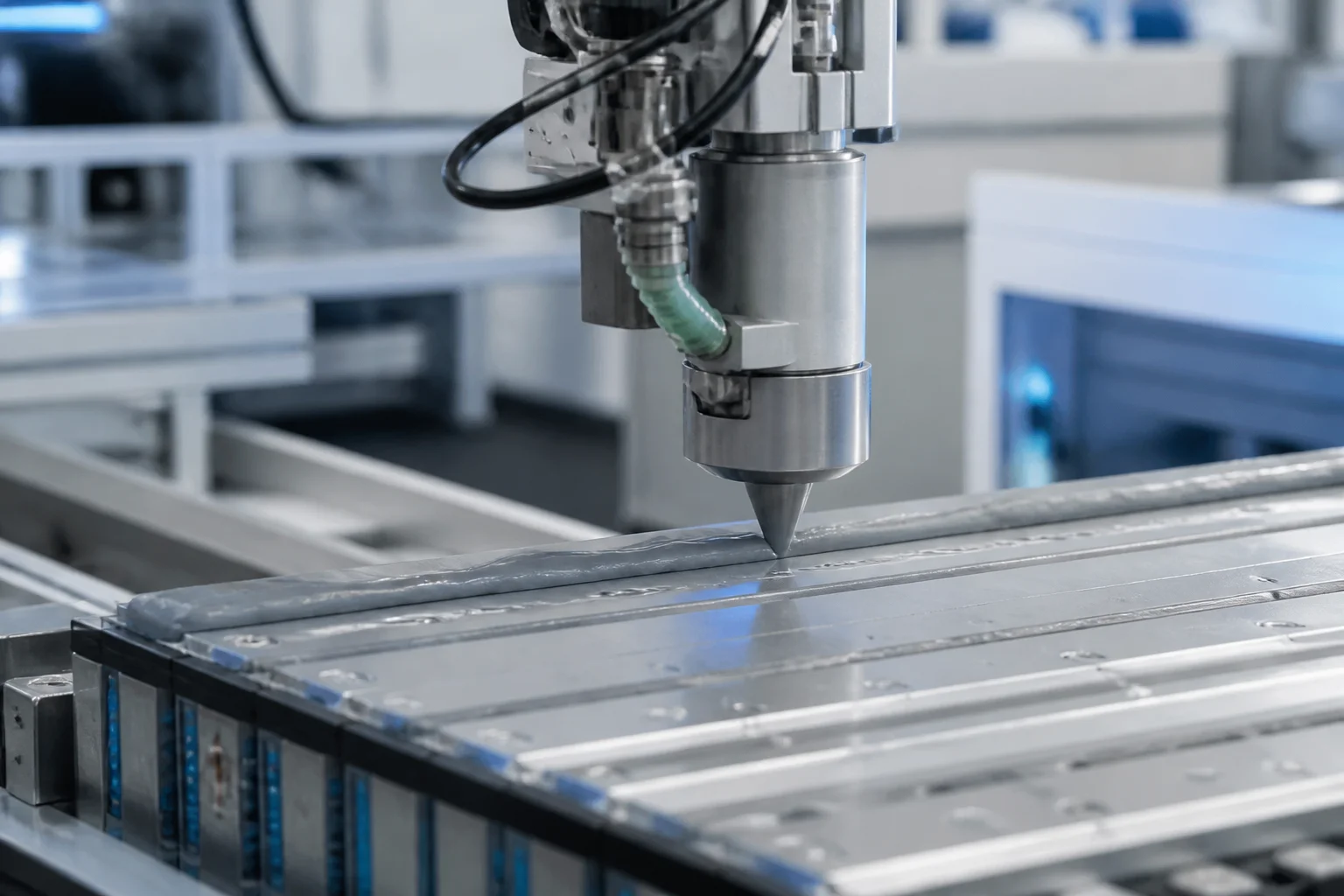
- Viscosity consistency for robotic dispensing — automated battery assembly lines require an adhesive with stable viscosity across the ambient temperature range of the factory floor, similar to the automation requirements discussed in our MS Polymer vs. Silicone analysis.
Common Mistakes When Switching to Thermal Adhesive Bonding
- Assuming higher filler content always means better performance. Overloading an adhesive with ceramic filler can reduce its flexibility, making it prone to cracking under vibration — the opposite of what a battery pack needs.
- Ignoring bond line thickness control. Thermal conductivity drops sharply if the adhesive layer is too thick; most formulations are engineered for a specific bond line gap (often 0.5–2mm).
- Skipping surface energy testing. Aluminum cooling plates often have oxide layers that reduce adhesion unless properly prepared or treated with a compatible primer.
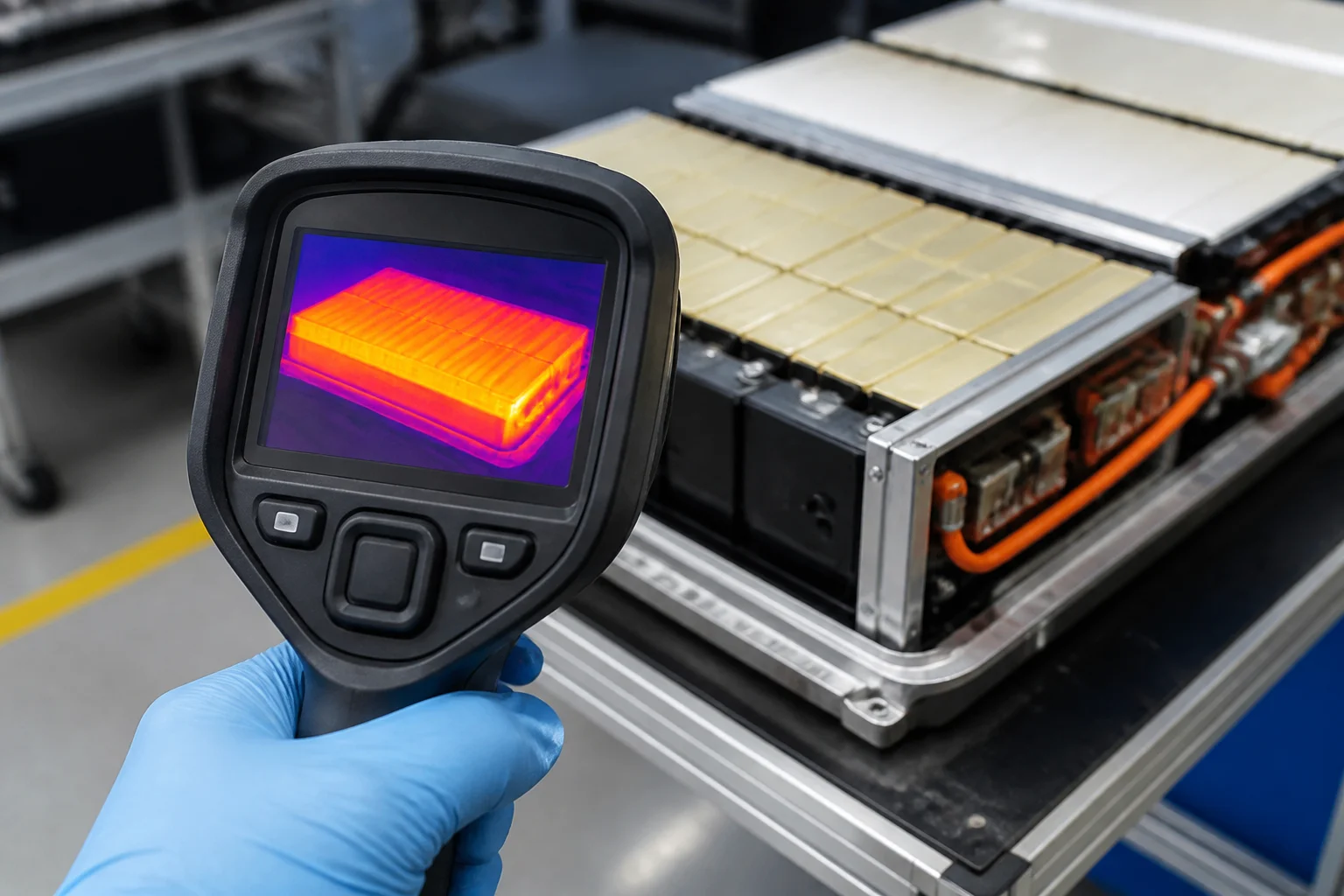
- Underestimating cure monitoring needs. Because thermal adhesives are often used in safety-critical battery assemblies, in-line cure verification (rather than spot-checking) is becoming standard practice in 2026 EV plants.
- Treating thermal and structural requirements as interchangeable. As shown in the comparison table above, a pure structural adhesive will not manage heat, and a pure thermal adhesive may not meet crash-safety load requirements — the two often need to be specified separately even within the same battery enclosure.
Conclusion: Bonding as a Thermal Management Strategy
As EV platforms push toward higher energy density and faster charging, thermal conductive adhesive is shifting from a supporting material to a core engineering decision. Battery pack designers who treat adhesive selection as a thermal management strategy — not just a bonding afterthought — are seeing measurable improvements in cell longevity and pack safety margins.
For procurement teams building out 2026 supplier shortlists, the priority should be verified thermal conductivity data, consistent viscosity for automated dispensing, and cure profiles that match existing production infrastructure. Explore our full range of Polyurethane and Silicone products to compare structural bonding options alongside thermal-specific formulations for your next EV assembly project.
 English
 العربية
 Español de México
 Русский
 Tiếng Việt
 Português do Brasil
 Bahasa Indonesia
 Türkçe