

Table of Contents
Understanding Polyurethane Caulk
Definition of Polyurethane Caulk (Poly Caulk)
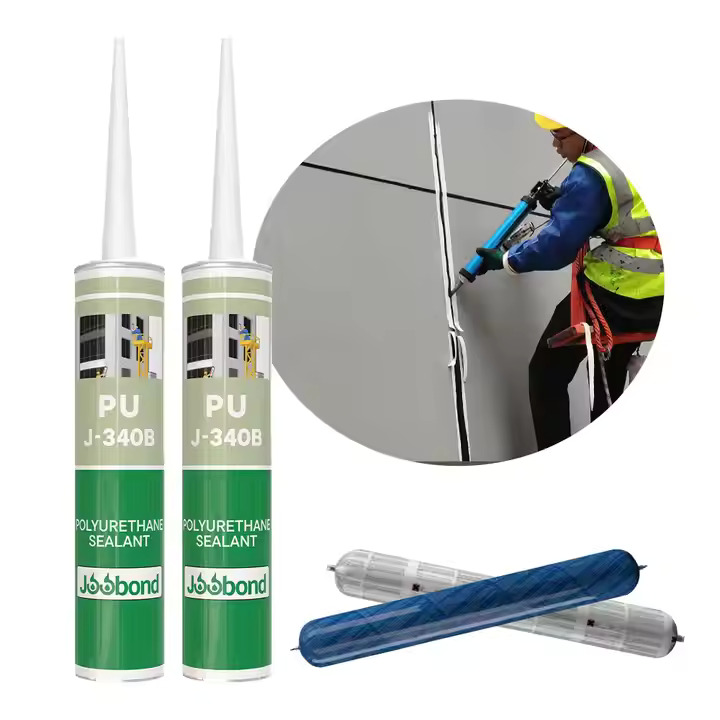
Polyurethane caulk, which is also often referred to as “poly caulk,” is an organic polymer-based sealant. It is moisture-cured and cures by reacting with atmospheric humidity to form a strong, flexible bond that prevents the ingress of moisture whilst still allowing movement and environmental stress.
Key Properties of Poly Caulk
Chemical Composition:
Organic polyurethane polymer
Curing Mechanism:
Moisture-activated vulcanization
Flexibility:
±25-50% joint movement capability
Shore A 15-45 (standard formulations)
Working Time:
15-30 minutes (toolable)
24-72 hours, depending on conditions:
A full cure
Advantages Over Silicone Caulk
Paintable: Accepts most paints and coatings
Stronger Adhesion Strength: Bonding Porous Surface
Our Costs Are Going Through The Proper Iso9001:2010. Rust Proof Metal Development Extremely Simple For Cleansing Compared to Silicone Lessen Heating Due To Speedier Cooking Time Expense Efficiency.
Surface Compatibility: Good for wood, it is bad with drywall.
Ease of Cleanup: Water soluble in uncured form.
Limitations to Consider
UV Degradation: Must be shielded from direct sunlight.
Temperature Sensitivity: Challenging Application Below 40°F (4°C)
Service Life: 5-10 years in contrast to silicone, which last for over 20.
Professional Applications
Construction Uses
Window and door perimeter sealing
Expansion joint filling in concrete
Roof flashing and gutter sealing
Drywall corner bead sealing
Wood deck and trim applications
Industrial Applications
Truck and trailer seam sealing
Precast concrete panel joints
Metal building envelope sealing
HVAC ductwork sealing
Marine deck hardware bedding
Installation Best Practices
Surface Preparation
Prepare the surfaces properly (clean free from dirt, oil, old sealant)
Let it dry thoroughly (wet affects adhesion)
Etch clean surfaces (better mechanical bonding)
Masks edges for neat cutting
Application Techniques
High-Performance Caulking Gun for Better Bead Control
Snip applicator nozzles at 45° to match joint width.
Do it in one continuous motion with a equal amount of pressure
Shaping tool with fast interference
Create the right environment (40-90°F, 40-70% RH)
Curing Considerations
Wet for the first 24 hours
Make sure you wait for full cure before painting (usually 24 hours)
No Joint Stresses in Primary Cure Period
Accelerated curing by moisture misting in dry conditions
Maintenance and Repair
Look out for cracks, or adhesion failure (recommended annually)
Wash with mild soap and soft bristle brush
Remove and replace deteriorated sections
Every 5-7 years with exterior applications
Make repairs with compatible sealants (same chemistry)
Specialized Poly Caulk Varieties
Elastomeric Polyurethane: Extreme flexibility (±50%)
Non-Sag Formulations: Vertical surface applications
Fast-Skin: Bettas skin in 15-30 mins
Low-Modulus: For delicate substrates
High Temp: Resists temperature up to 250°F (121°C)
Cost Considerations
Material Cost: 5−15 per 10 oz tube of
Industrial Grade: 15-20 Linear ft per Tube
Life-cycle Cost: Will need to be replaced more often than silicone
Value Proposition: Perfect for paint and wood applications
 English
 العربية
 Español de México
 Русский
 Tiếng Việt
 Português do Brasil
 Bahasa Indonesia
 Türkçe