

Table of Contents
- 1. What Makes an Epoxy “Industrial Grade”
- 2. Reading an Epoxy Datasheet: What Actually Matters
- 3. Two-Part vs. Structural Metal Bonding: Choosing the Right Formulation
- 4. Common Application Mistakes That Cause Epoxy Bond Failure
- 5. Sourcing Checklist for Industrial Epoxy Suppliers
- 6. Conclusion: Match the Epoxy Chemistry to the Job, Not Just the Label
Industrial epoxy adhesive remains one of the most searched and most misunderstood categories in structural bonding. Procurement teams often default to epoxy because of its reputation for strength, without understanding that “epoxy” is not one product — it is a family of two-part chemistries with dramatically different working times, cure profiles, and substrate compatibility. This guide walks through what actually differentiates industrial-grade epoxy adhesives, how to read a technical datasheet correctly, and the sourcing questions that prevent costly bonding failures.
What Makes an Epoxy “Industrial Grade”
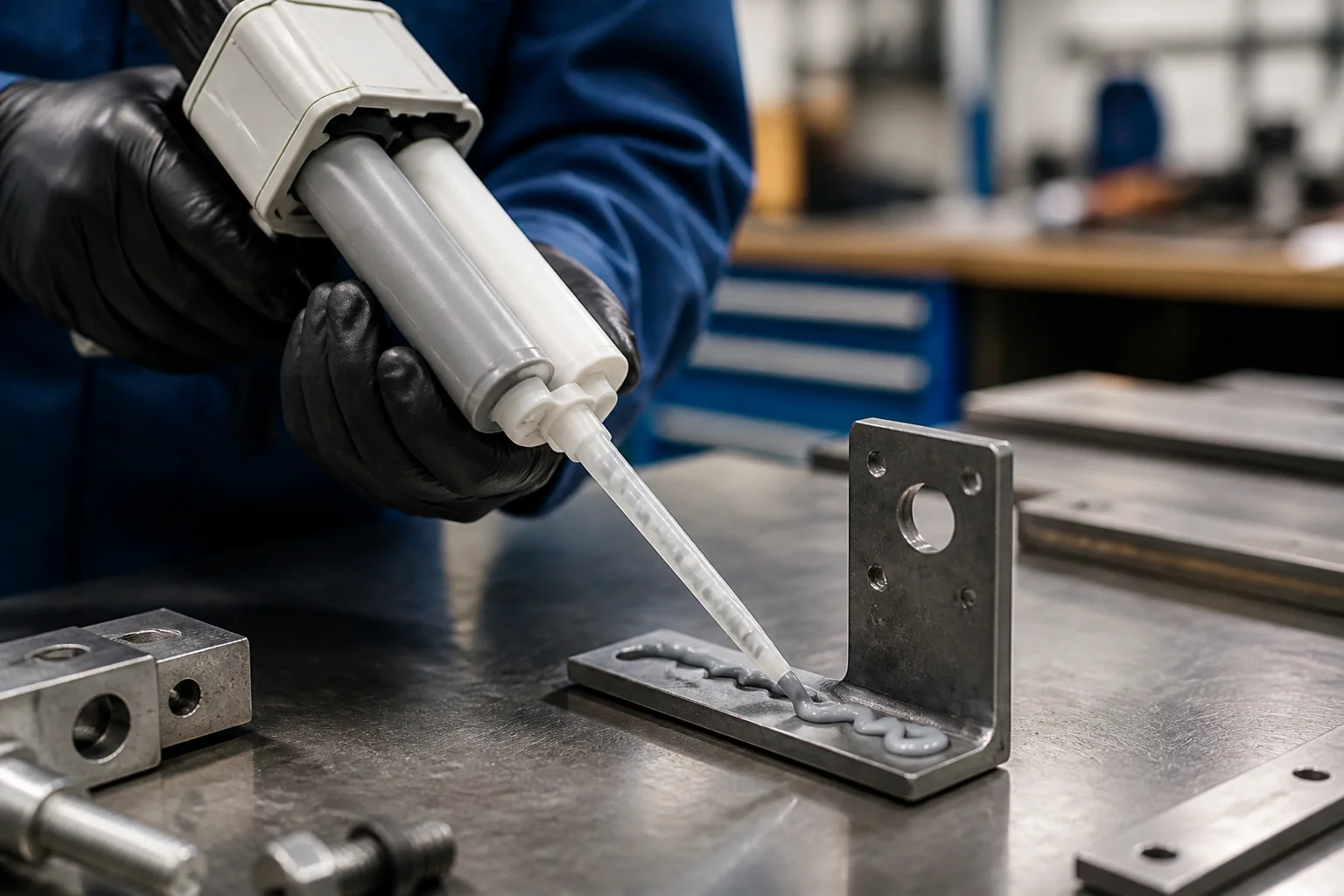
Consumer-grade epoxy (the kind sold in small tubes at hardware stores) and industrial epoxy adhesive share the same basic two-part resin-and-hardener chemistry, but differ significantly in three areas:
- Consistency and batch control: Industrial suppliers run tighter quality control on resin viscosity and hardener ratios, which matters when bonding at scale across thousands of units.
- Engineered cure profiles: Industrial-strength epoxy adhesives are formulated for specific working environments — fast-cure variants for high-throughput assembly lines, slow-cure variants for large surface areas.
- Substrate-specific formulation: Industrial two-part epoxy adhesives are often engineered for specific substrate pairs rather than the general-purpose claims common in consumer products.
Reading an Epoxy Datasheet: What Actually Matters
Most procurement mistakes happen because buyers skim past the technical datasheet and rely on marketing claims like “industrial strength.” Here is what to actually check:
| Datasheet Field | Why It Matters |
|---|---|
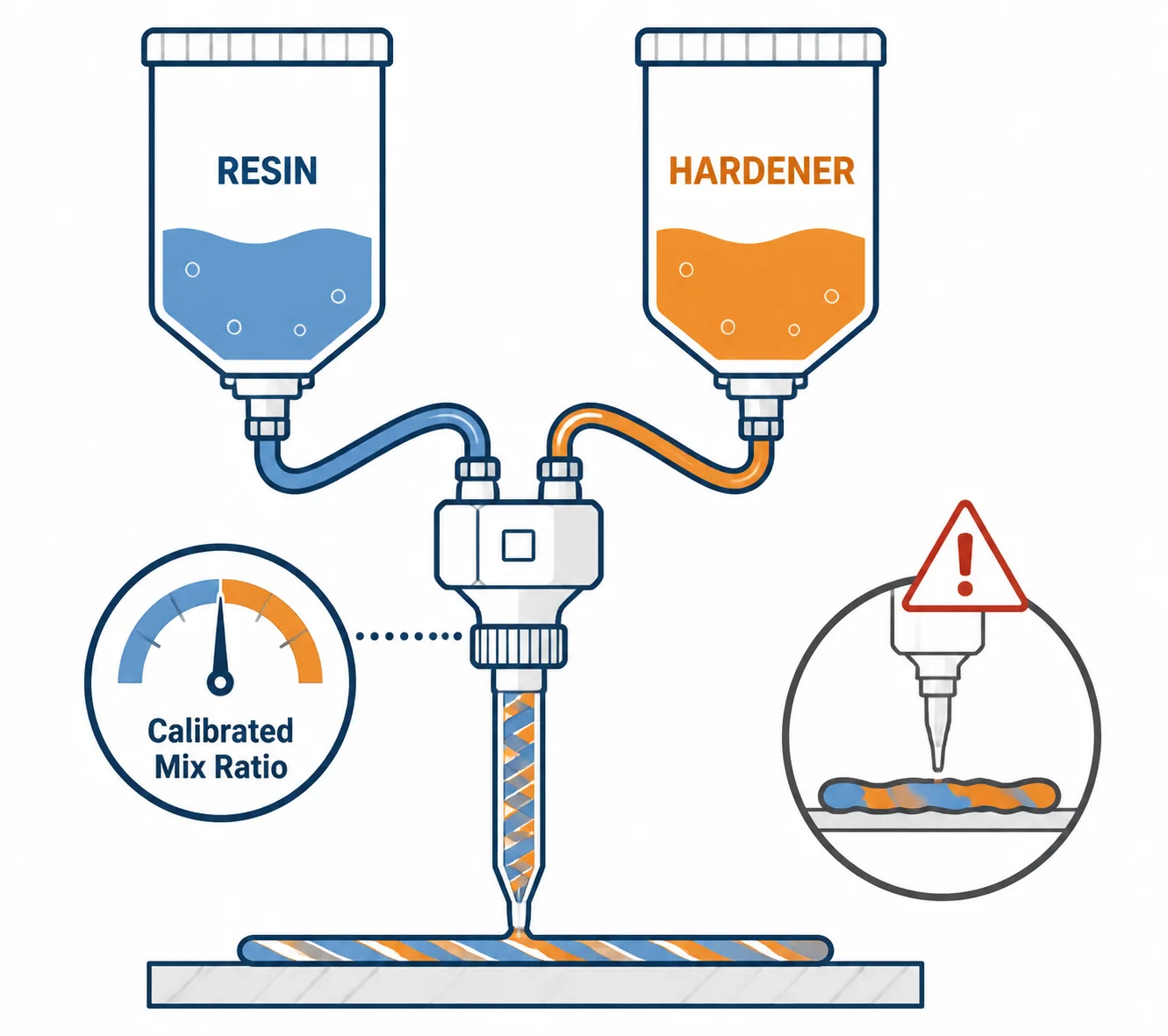
| Mix ratio (by volume/weight) | Determines dispensing equipment compatibility; inaccurate ratios lead to under-cured or brittle bonds. |
| Working time (pot life) | The window to apply and position parts before the epoxy begins to set. |
| Full cure time | Time to reach maximum strength, often 24–72 hours even after tack-free. |
| Lap shear strength (ASTM D1002) | Standard test for bond strength between overlapping substrates. |
| Service temperature range | Temperature window the cured bond can operate in without losing strength. |
Two-Part vs. Structural Metal Bonding: Choosing the Right Formulation
Not every industrial epoxy adhesive is designed for the same load case. Our Metal Adhesive Supplier Guide covers substrate-specific selection in more depth, but the core distinction is:
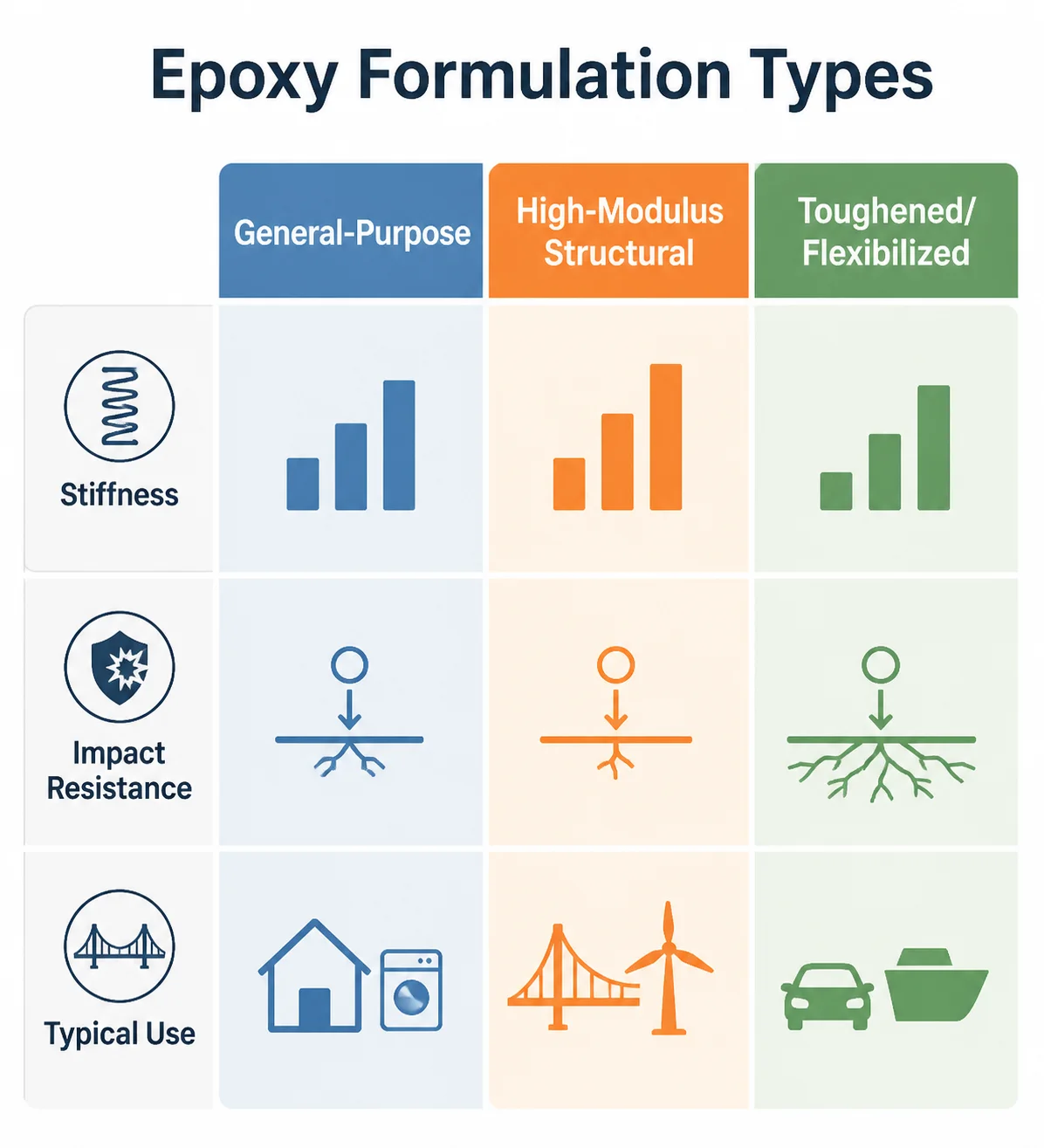
- General-purpose industrial two-part epoxy: Balanced strength and working time for most metal, composite, and rigid plastic bonding.
- High-modulus structural epoxy: Formulated for maximum stiffness, typically used in aerospace and heavy equipment bonding.
- Toughened/flexibilized epoxy: Modified with rubber or thermoplastic additives to resist impact and thermal cycling stress.
For applications requiring more flexibility than epoxy can offer while retaining strong adhesion, our Epoxy Resin vs. Polyurethane Sealants comparison covers when polyurethane becomes the better structural choice.
Common Application Mistakes That Cause Epoxy Bond Failure
- Inaccurate mix ratios. Eyeballing the resin-to-hardener ratio instead of using calibrated dispensing equipment is the most common cause of under-cured or brittle bonds.
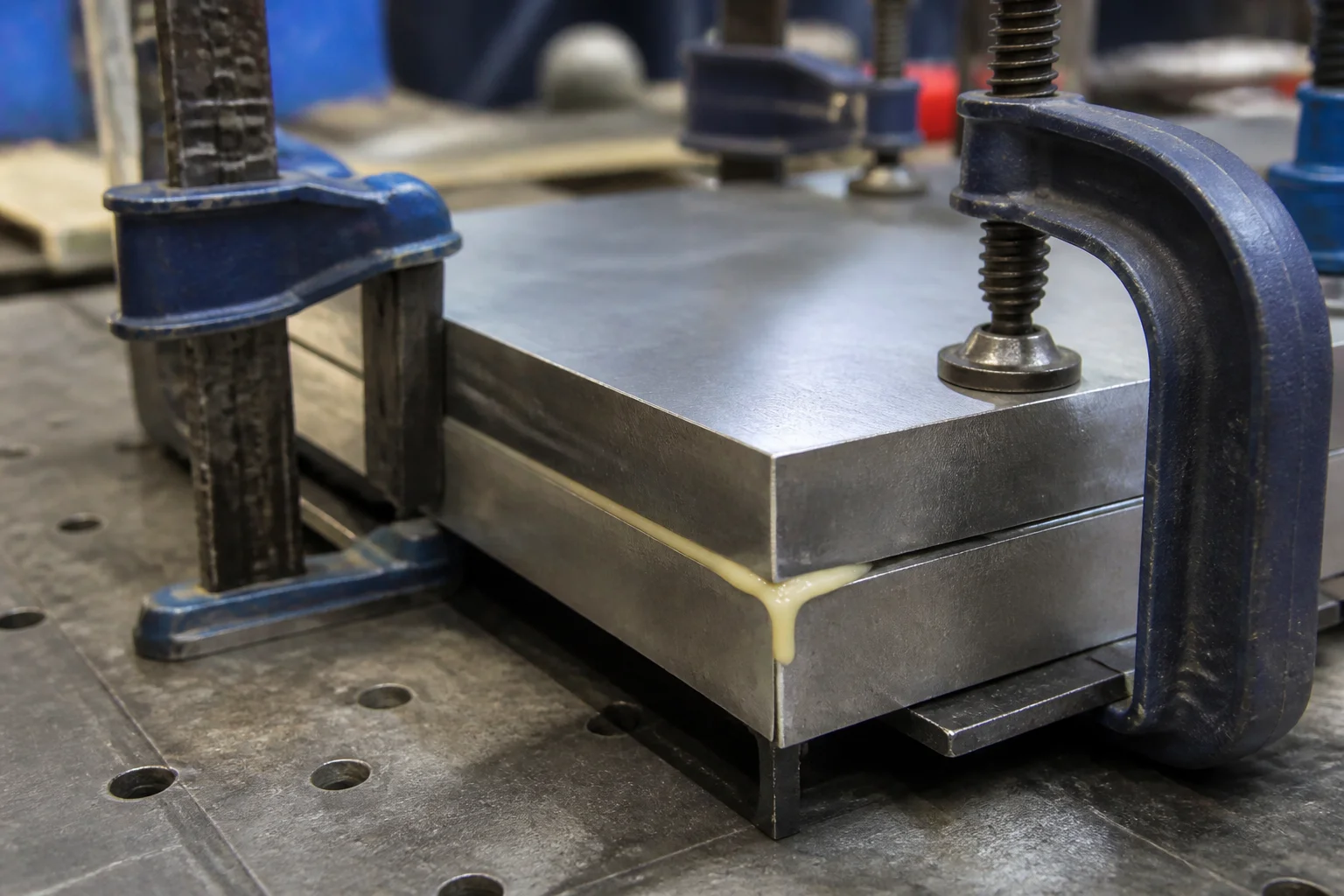
- Bonding before full surface preparation. Oil residue, oxidation layers, or dust dramatically reduce adhesion even when the epoxy itself is correctly mixed.
- Disturbing the joint before full cure. Tack-free is not the same as fully cured.
- Ignoring service temperature limits. An epoxy rated for room-temperature service will soften in high-heat applications.
- Applying outside the recommended temperature/humidity window. Cure chemistry is temperature-dependent.
Sourcing Checklist for Industrial Epoxy Suppliers
- Full technical datasheet with lap shear strength data referencing the actual substrate you’re bonding.
- Batch consistency documentation, particularly for production-line applications.
- Service temperature and chemical resistance data relevant to your specific operating environment.
- Minimum order quantity and packaging options that match your dispensing equipment.
Conclusion: Match the Epoxy Chemistry to the Job, Not Just the Label
“Industrial epoxy adhesive” is a broad category, and the right formulation depends on substrate pairing, load type, working time requirements, and service environment. Explore Joobond’s full range of structural adhesive and epoxy products engineered for industrial metal, composite, and structural bonding applications.
 English
 العربية
 Español de México
 Русский
 Tiếng Việt
 Português do Brasil
 Bahasa Indonesia
 Türkçe